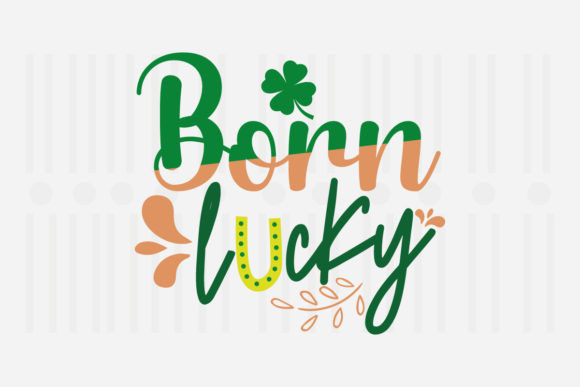
Born Lucky St. Patrick’s Svg Embroidery Review
As a designer who spends more time than I care to admit staring at stitch lines and judging thread tension, I approach every new embroidery file with a mix of optimism and skepticism. The market is flooded with generic holiday designs, so finding one that actually feels like it belongs on a finished product requires a keen eye. When I pulled up the Born Lucky,St. Patrick s Svg, my first thought wasn’t about the holiday itself, but about how this graphic would translate from a flat vector into a tactile, three-dimensional textile piece. This isn’t just another clipart cutout; it’s a design asset that demands careful consideration before it ever touches the needle plate.
First Impressions and Visual Personality
The moment you load the source file, whether in eps or svg format, the layout speaks for itself. The phrase "Born Lucky" carries an inherent sense of playful confidence. It’s not aggressive, nor is it overly ornate. It strikes a balance that works exceptionally well for custom apparel and lifestyle products. The typography likely dominates the visual field, which is smart. In embroidery, text is king because it communicates immediately. However, the success of any text-based machine embroidery design hinges entirely on legibility after stitching.
Visually, the design exudes a casual, boutique vibe. It feels right at home on a soft cotton tee or a structured canvas tote. The mood is festive but wearable, meaning it doesn’t scream "costume" but rather whispers "lifestyle." For Etsy sellers and small shop owners, this distinction is crucial. Customers want items they can wear year-round or use as functional decor, not just things to throw on for March 17th. The clean lines suggest a modern aesthetic that aligns perfectly with current trends in handmade goods. It promises a high-quality finished product if executed correctly, offering a professional look that elevates the perceived value of your merchandise.
Real-World Application: The Tote Bag Scenario
To truly evaluate this embroidery project, let’s imagine a real-world scenario. You are preparing a batch of custom embroidered tote bags for a local craft fair or an online listing. You choose a natural, unbleached canvas bag. The contrast between the dark fabric and bright thread is going to be your best friend here. Placing the Born Lucky,St. Patrick s Svg centered on the front panel, you start thinking about the stitch types. A bold satin stitch for the letters would give it that premium, raised texture that customers love to touch. Alternatively, a dense fill stitch could create a solid block of color that stands out against the weave of the canvas.
Now, consider a different angle: a baby onesie or a nursery pillow cover. Here, the stakes change. The fabric is thinner, softer, and more prone to puckering. If the design has large areas of fill stitch, you might need to adjust the underlay or add extra stabilizer to prevent distortion. The phrase "Born Lucky" takes on a sweeter, more sentimental tone in this context. It becomes a perfect personalized gift for a new parent, implying good fortune for the child. This versatility is where the design shines. It transitions smoothly from rugged outdoor gear to delicate infant wear, provided you adjust your technical settings accordingly.
Technical Performance and Stitch Clarity
When evaluating how a design performs in real-life situations, we have to talk about stitch density and detail. The description notes that the file allows for easy color changes and is ready to print. This suggests a vector-based structure that scales well, but scaling doesn’t always equal embroiderability. If the lettering includes tiny serifs or intricate decorative accents, those details can get lost in the fuzz of thick threads or disappear entirely on textured fabrics like wool or terry cloth.
For commercial embroidery projects, clarity is non-negotiable. If a customer buys a sweatshirt with this design, they expect the message to be readable from five feet away. If the stitch density is too low, the fabric background will show through, making the text look sparse and cheap. Conversely, if it’s too high, the garment may feel stiff and uncomfortable. The Born Lucky,St. Patrick s Svg seems optimized for medium-density applications, making it ideal for t-shirt embroidery and apron decoration. These items typically use stable cotton blends that hold stitches well without excessive bulk.
Another critical factor is the thread colors. The ability to change colors easily is a huge plus for designers who want to customize their offerings. Imagine offering a classic green and white version for St. Patrick’s Day, but also a neutral beige and black version for everyday wear. This flexibility increases the lifespan of your inventory. You aren’t stuck with a seasonal item that expires in April; you’ve created a versatile brand asset. Just remember to test these color combinations on scrap fabric first. Screen colors rarely match thread colors exactly, and what looks vibrant digitally might look muddy when stitched.
Where Caution Is Required
Not every surface is created equal, and there are specific scenarios where this design should be used carefully. Avoid placing intricate versions of this design on highly textured fabrics like heavy tweed or looped towels, as the thread won’t sit flat. Similarly, be cautious with stretchy knits unless you are using a tear-away stabilizer and a ballpoint needle to prevent skipped stitches. Curved surfaces, such as the front panel of a fitted cap, require significant digitizing expertise to ensure the text doesn’t distort. If the original file doesn’t account for curvature, you may end up with wavy, unreadable letters.
Also, consider the washing durability. If you are creating handmade products intended for frequent laundering, like kitchen towels or baby blankets, ensure the design isn’t so densely packed that it traps moisture or causes the fabric to degrade faster. A balanced design that respects the integrity of the base material will result in happier customers and fewer returns.
Strategic Value for Craft Businesses
From a business perspective, adding the Born Lucky,St. Patrick s Svg to your catalog is a strategic move. It taps into a massive seasonal demand while maintaining enough style neutrality to appeal to buyers who aren’t strictly holiday-focused. For digital product sellers, this SVG is a valuable design asset. It can be used for printable mockups, social media graphics, or even as a template for sublimation prints if the client prefers ink over thread.
The inclusion of source files means you retain control over the final output. You aren’t locked into a pre-digitized machine file that might not suit your specific hoop size or thread palette. This freedom allows you to tailor the design to your brand’s voice. Whether you are aiming for a rustic, vintage look or a sleek, modern aesthetic, the vector foundation gives you the tools to make it happen. For craft business owners, this adaptability translates directly into higher profit margins and broader market reach.
Final Designer Notes
Before committing to a full production run, always conduct a thorough test. Hoop a piece of your actual garment fabric, apply the appropriate stabilizer, and run the design. Inspect the back for excess thread tails and the front for any gaps in coverage. Check the small details—do the curves flow naturally? Do the corners come to a sharp point? If the design relies on fine lines, verify that your machine can handle them without breaking thread.
Furthermore, confirm the licensing terms. While the file is described as ready for commercial use, always double-check the specific rights associated with the purchase. Can you sell unlimited quantities? Are there restrictions on digital resale? Clear understanding of these terms protects your small shop product line from legal issues down the road.
In conclusion, the Born Lucky,St. Patrick s Svg is a strong candidate for anyone looking to expand their Crafts and Graphics offerings. It offers a blend of festive charm and everyday usability that resonates with a wide audience. By paying attention to stitch quality, fabric choice, and proper stabilization, you can transform this simple vector into a stunning, high-value embroidered piece. It’s not just a holiday decoration; it’s a testament to good design principles applied to practical, wearable art. For the discerning maker, it’s a tool worth having in the arsenal.